

Open any doorstep delivery in Europe, North America or Southeast Asia and there is a good chance the parcel arrived in a flat-folding corrugated box with a tuck-in lid — the format the industry calls an aircraft box, and the rest of the world calls a mailer box. It is not an accident that so many of them come out of China. Behind that one folded sheet of board sits an industrial ecosystem that few other regions can match.
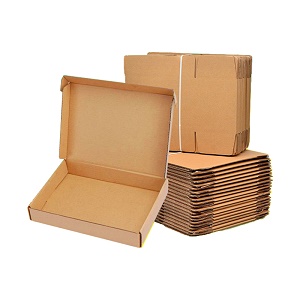
A supply chain that lives in one place. In China’s packaging clusters, paper mills, corrugating lines, die-cutting machines, printers and hand-assembly teams often operate within a few kilometres of each other — sometimes under a single roof. Raw paper becomes a printed, creased, glued box without ever leaving the district. That density removes layers of middlemen, keeps quality consistent, and turns a complex product into a predictable one.
Cost efficiency without sacrificing quality. Because Chinese factories purchase paper in volume and run dedicated lines for e-commerce formats, the unit price stays low even at moderate order quantities. Buyers no longer have to choose between “cheap” and “custom”: they can start with a manageable first order, test the market, and scale up on the same artwork. Shipping works in the buyer’s favour too — because aircraft boxes travel flat and unassembled, far more units fit into every cubic metre of container space.
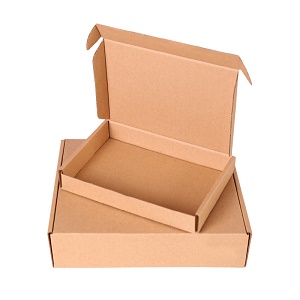
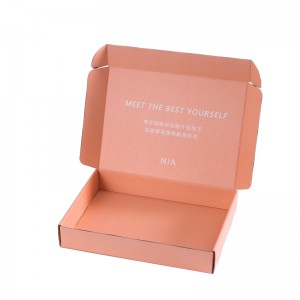
Customisation is the default, not a premium add-on. Size, flute type, board grade, colour, matte or gloss lamination, foil stamping, embossing, spot UV, window cut-outs, inserts and inner printing are all standard conversations. A brand can specify a kraft box for a rustic skincare line and a rigid-feel laminated version for a premium gadget in the same inquiry. For sellers, this means packaging becomes part of the product story rather than a cost to hide.
Material choice that fits modern values. Recyclable kraft liners, recycled fibre content and lighter board grades all translate directly into lower freight weight and a smaller footprint. An aircraft box ships flat, assembles in seconds without tape or extra filling, and is easy for the end customer to recycle — three quiet advantages that matter to both the finance team and the customer.
Speed. Strong production capacity, mature sampling workflows and proximity to major ports such as Ningbo, Shenzhen and Xiamen let Chinese suppliers move from artwork to shipped container quickly, and keep repeat orders on schedule during peak seasons.
And finally, the unboxing moment. The tuck-top design presents the product cleanly, protects corners in transit, and gives brands a blank canvas for logos and messaging — the exact combination that social-media-driven commerce rewards.
None of this is a passing trend. Chinese aircraft boxes are popular because they deliver a rare mix: reliable structure, flexible customisation, competitive pricing and fast delivery, all from one source. For brands building their own unboxing experience, that is a difficult offer to beat.
Post time: Oct-06-2026